
GARLIC
GARLIC
Introduction
Origin
Properties
Consumption
Conservation
Introduction
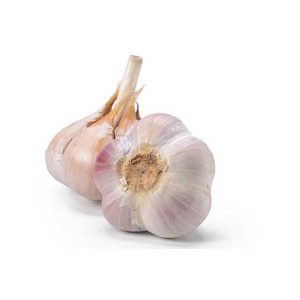
Garlic is a vegetable whose bulb, white or creamy in color and very fragrant, gathers around a discoid stem, covered by translucent white-yellow scales, forming the so-called "garlic head".
Origin
The cultivation of garlic is very old, and its origin is located in Central Asia, from where it spread to many parts of the world. Common in Europe since the Roman Empire, it was already used in India and Asia before the arrival of the Europeans. In the colonial period it was introduced in Africa and America.
Properties
Garlic has numerous properties, including its antiseptic, anti-inflammatory, bactericidal, antiviral, antifungal and intestinal antiparasitic power. Its sulfur components are the ones that concentrate most of its properties. Likewise, garlic prevents vascular diseases by reducing cholesterol levels, lowering blood pressure in addition to having an anticoagulant effect and also helping to prevent diabetes thanks to its hypoglycemic power. Finally, it should be noted that the allyl-sulfide compounds it contains block the development of certain tumors, partially repair damaged cellular genetic material, while improving the individual's defences.
Consumption
Garlic is an essential flavoring agent in popular cuisine and its use is widespread geographically, constituting itself as the main element in the preparation of numerous stews and sauces. Its consumption can be produced fresh, dry, dehydrated, whole, finely chopped, grated, filleted, and, sometimes, mixed with oil depending on the selected recipe. Its use is especially recommended in roast meat, which gives it a really tasty flavor. In addition, it gives its name to numerous dishes, such as 'ajada', chicken with garlic or garlic soup.
Conservation
To preserve whole heads of garlic, it is convenient to leave them in a ventilated place. It is not convenient to store it in closed containers or in the refrigerator.
Availability period
National International
JanFebMarAprMayJunJulAugSepOctNovDec
Varieties
Availability period
National International
JanFebMarAprMayJun
JulAugSepOctNovDec
Nutritional and energetic values for 100 gr.
Nutritional and energetic values for 100 gr.
 EN
EN  ES
ES  CA
CA  PT
PT  FR
FR